

The Wilma: How a Vaudeville Singer's Name Outlasted a Century in Missoula
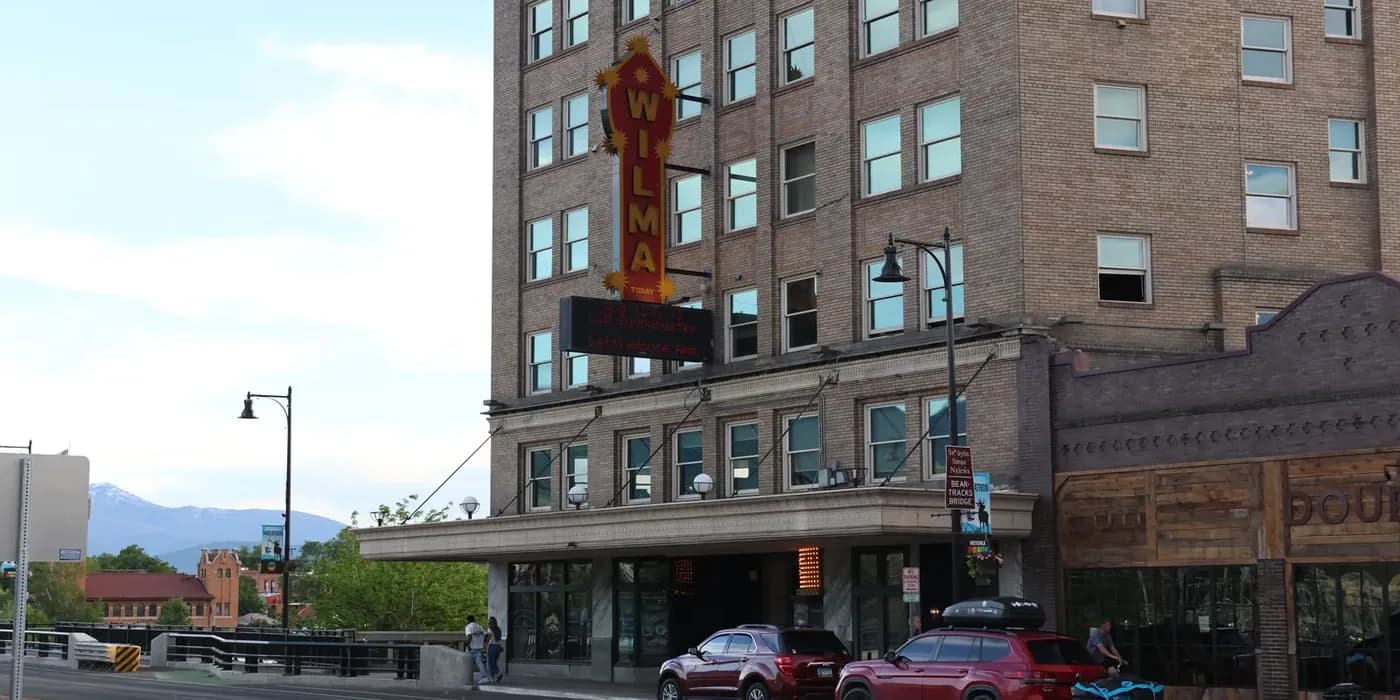
“Since 1921, the Wilma Theatre has stood as a monument to arts and culture in downtown Missoula, hosting grand cinema screenings and live performances along the Clark Fork River.”
The Wilma: How a Vaudeville Singer's Name Outlasted a Century in Missoula
A 1921 theater built by a Wild West showman has survived by being reinvented by people who weren't from here.
Billy Simons was a furniture maker's apprentice in West Virginia before he was anything else. His father, a logger, drowned when Billy was a boy, leaving him the head of a family of six. He scraped together enough to buy a lunch stand in a Kansas rail town, and from there built a theater chain that stretched from Miles City to Spokane to Alaska.
By 1920, Simons was president of the Northwest Theatre Company and had decided Missoula needed a building the city had never seen. He hired Norwegian architect Ole Bakke and Bakke's assistant, H.E. Kirkemo, to design an eight-story, steel-framed high-rise on Higgins Avenue, right where downtown meets the Clark Fork River. It was Missoula's first skyscraper. Inside, Bakke drew a Louis XIV gilt auditorium with loge seating, a Robert Morton pipe organ, uniformed ushers, canaries in cages, and vases of fresh flowers on display.
Simons named the building for a 24-year-old light opera singer from Collinsville, Kentucky, named Edna Wilma. He had seen her perform in one of his shows around 1919 and married her two years later. By the time the Wilma Theatre opened in 1921, the couple's name was on a complex that also held a restaurant, a gymnasium, three banquet rooms, apartments, offices, and an Olympic-sized indoor swimming pool in the basement called the Crystal Plunge. The pool lasted about ten years before condensation from the water chewed at the steel framing and forced it closed.
Edna Wilma Ran 31 Theaters After Billy Died
Billy Simons had a stroke and spent his last years traveling by horse and wagon between a Wilma apartment and a cabin at Lolo Hot Springs, where Edna took him for the sulfur water. He died in 1937. Edna, at 42, became president and treasurer of the W.A. Simons Amusement Company, which by then controlled 31 theaters across Montana, Idaho, and Alaska.
She did not sell. She built nine more theaters during the Depression and war years, including a new house in Wallace, Idaho, dedicated to Billy's memory. She ran the operation from an apartment inside the Wilma building until she died in 1954, leaving the business to her second husband, Edward Sharp.
Sharp ran the Wilma with partner Robert Sias for nearly four decades. He was known in downtown Missoula for feeding a huge flock of pigeons from the Wilma's roof, and his constant companion was a pigeon named Korro Hatto, who perched on his shoulder while he took tickets and served refreshments. In 1982, Sharp built a small theater in the Wilma's basement called the Chapel of the Dove, modeled after the New York City chapel where he and Edna had married. It showed movies and hosted weddings until Sharp died in 1993. The altar wound up at Rockin' Rudy's, the record store a few blocks away.
Nick Checota Bought the Wilma in 2015 and Rebuilt What Nobody Could See
After Sharp's death, Missoula businessman Tracy Blakeslee bought the building. For the next two decades the Wilma ran mostly as a movie theater with occasional live shows, its historic interior growing neglected. When Nick Checota, a Wisconsin transplant who had worked in finance, consulting, and real estate before moving west, bought it in March 2015, the renovation he started was not cosmetic.
Checota and his wife Robin kept the original murals, the chandelier, and the Louis XIV gilding. Everything behind the finishes changed: new heating, cooling, and electrical systems throughout; a renovated stage raised 21 inches for better sightlines; expanded bathrooms; a center bar in the balcony where the projection room had once been; and rebuilt green rooms. The balcony got 420 new seats. The centerpiece was a transportable line-array sound system that Checota later said he had deliberately oversized for the room, knowing he planned to build an outdoor amphitheater on the Blackfoot River that could share it.
The reopening show in October 2015 was not a national headliner. It was The Lil Smokies and the WhizPops, two Montana acts. Within a year, the Wilma broke its concessions record three times in a single month and hosted a sold-out Sturgill Simpson show on Election Night 2016, a month before Simpson's Album of the Year Grammy nomination. The purchase also created Logjam Presents, the promotion company that now books and operates the Wilma alongside the Top Hat Lounge, a downtown Missoula bar that has hosted bands since 1952.
The Documentary Festival That Fills the Wilma Every February
The Wilma had been the flagship venue for the Big Sky Documentary Film Festival since 2005, a full decade before Checota arrived. The festival is Academy Award-qualifying and the largest nonfiction film festival in the American West. Each February it runs roughly 150 films over ten days, drawing more than 200 visiting filmmakers and a combined audience near 20,000 to downtown Missoula. MovieMaker Magazine has named it one of its "50 Festivals Worth the Entry Fee" nine years running.
For a city of around 75,000, that kind of volume in ten days is real. The festival's continued use of the Wilma after the renovation was not a given. The upgraded projection, acoustics, and panel-event setup made the argument.
The Wilma Under Logjam Presents
Checota's renovation turned the Wilma into the flagship of a growing operation. Logjam Presents now books and operates the Wilma, the Top Hat, the KettleHouse Amphitheater on the Blackfoot River, and the Elm in Bozeman. In 2023, Live Nation acquired a majority stake in the promotion side of the business, bringing Ticketmaster to Logjam's venues and replacing the eTix platform that had handled ticketing before. The Checota family retained ownership of the buildings themselves.
The growth has not been frictionless. Ticket prices climbed after the Live Nation deal. Some local musicians and competing promoters have said Logjam's control of the city's largest rooms squeezed out smaller acts and independent booking. Checota's counterargument is the calendar itself: national headliners now route through a Montana city of 75,000 that most touring acts would have skipped ten years ago.
Concertgoer reviews still land on specific details: restored architecture, fast bartenders, and sound that carries cleanly to the balcony. The complaints are specific too. A few shows have pushed loud enough that people left with ringing ears, and a sold-out general-admission floor can pack tight depending on the act.
The Wilma has been open for 105 years. Three of the people most responsible for keeping it that way are buried together in the Missoula City Cemetery, a few miles from the theater. So is the pigeon.