

Black Coffee Was Building Toward the Quonset Hut All Along
Black Coffee Was Building Toward the Quonset Hut All Along
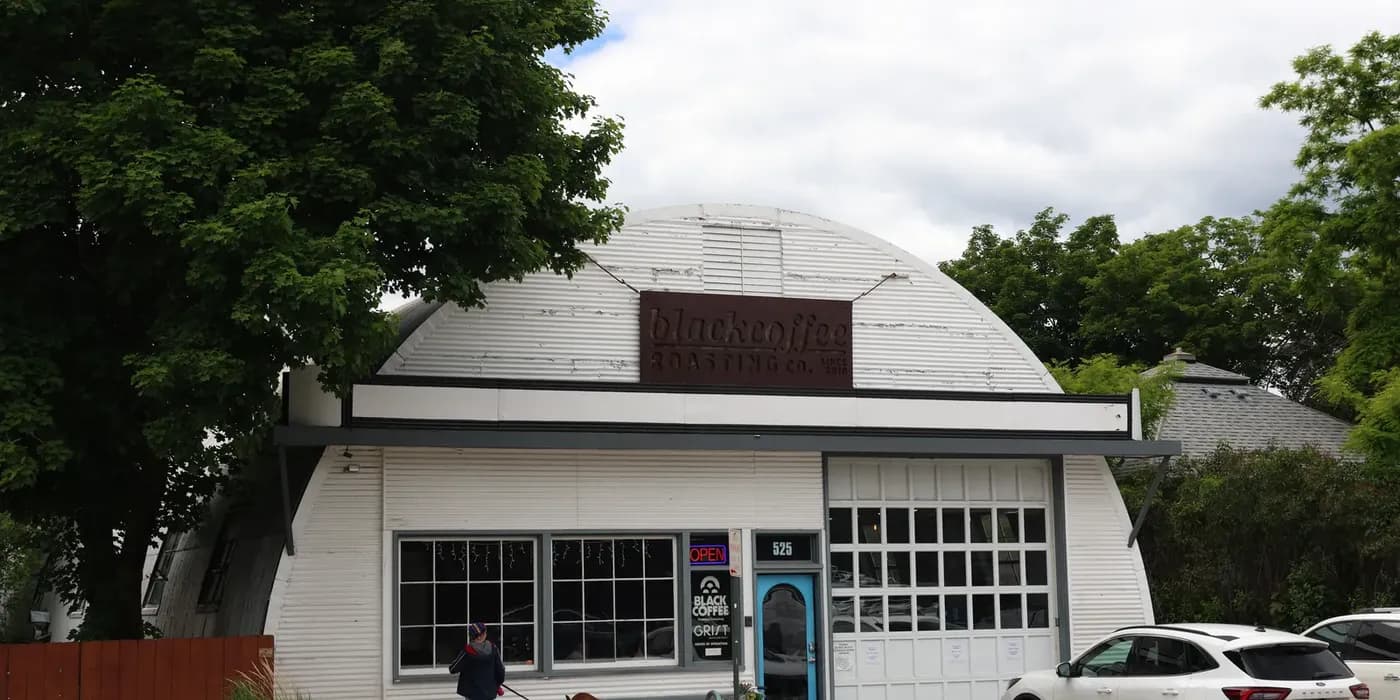
At the east end of Spruce Street, where downtown Missoula gives way to Lower Rattlesnake, a curved steel building holds a coffee bar and a working roastery under the same roof.
Black Coffee Roasting Company did not stumble into that building after the business grew. The company documented wanting it before its original shop opened. By the time Black Coffee finally moved into 525 E Spruce St in December 2014, the relocation was not simply an upgrade to a larger address. It completed a plan that had been sitting behind the business from the beginning.
The Building Came Before the Move
The idea for Black Coffee took shape in fall 2009. Fresh Cup's reported history traces it to a conversation between Jim Chapman and Matt McQuilkin, who saw room in Missoula for a local roaster with a different approach to coffee. Chapman had worked in wine sales. McQuilkin had worked as a cheesemonger. Both came to roasting through trades where origin, handling and transformation matter.
Black Coffee opened the following summer. The first production setup was a small roaster used during evenings in a garage. From there, the company moved into a corner of a Wyoming Street building occupied by a recycled-construction-materials store.
As production grew, the shop became increasingly tight. In its own account of the eventual move, Black Coffee described reaching the point where the old operation felt more like working through tunnels than working in a functional roastery.
The company needed production room without losing proximity to the city. The Quonset hut solved both problems.
A Roastery That Stayed Visible
The East Spruce building offered roughly 5,000 square feet near the meeting point of downtown and Lower Rattlesnake. It was industrial without being remote. More importantly, it gave Black Coffee enough room to keep roasting visible instead of pushing production behind a closed door.
Fresh Cup visited after the move and described a building that leaned into its original shape. A garage door had been turned into a wall of windows. Metal and wood furniture warmed the curved shell. From the cafe, customers could look toward the back and see green coffee waiting on pallets.
That visibility fit the company's way of explaining coffee. Black Coffee has long emphasized that beans from different regions, elevations and growing conditions should not be treated as interchangeable. Its published approach is to roast coffees individually to bring out those differences, then build blends after the component coffees have been developed.
The building made that process part of the public identity. The cafe was not decorated to resemble a roastery. It was inside one.
Growth Without Hiding the Work
Black Coffee's move announcement said the Wyoming Street shop had run completely out of space. The larger building created room for production, but the company framed the move as more than a capacity problem.
Employees and friends helped make the transition. The response from customers and other Missoulians led the company to describe the shop as something it could no longer think of as belonging only to itself. The new cafe was planned as a place where people could arrive alone, meet whoever was there and participate in the life around the roastery.
That ambition could have remained promotional language. The physical layout gave it substance. Coffee moved through the building as both a product and a visible craft, while the cafe put customers next to the work rather than in a separate storefront.
The same connection still defines the East Spruce address. Black Coffee's current official pages continue to identify the building as both cafe and roastery. Its online catalog has expanded, but those products still point back to coffee roasted in Missoula.
The Destination Was Part of the Plan
Many businesses acquire their identity after they move into a distinctive building. Black Coffee's path ran in the opposite direction.
The company began with the kind of work it wanted to do, tested it through late-night garage roasting, built a customer base from a cramped first shop and grew until the operation needed more room. All the while, the East Spruce Quonset hut remained the destination.
When the move finally happened, Black Coffee did not have to invent a story for the building. The business had already spent years building toward it.
That is what makes the location more than a recognizable Missoula coffee shop. The curve of steel at the end of Spruce Street is a record of the company's progression: from an idea, to a garage, to a corner workspace, to the place it wanted before the first bag of Black Coffee was sold.
A Short Timeline
- Fall 2009: Jim Chapman and Matt McQuilkin begin developing the idea for a Missoula coffee-roasting company.
- Summer 2010: Black Coffee Roasting Company opens after beginning production with evening roasting in a garage.
- Before December 2014: The operation moves from the garage into a small Wyoming Street workspace and eventually outgrows it.
- December 2014: Black Coffee moves into the roughly 5,000-square-foot Quonset hut at 525 E Spruce St.
- 2015: Fresh Cup documents the completed cafe and visible roasting operation inside the East Spruce building.
Visit Black Coffee Roasting Company
Looking for current hours, contact information, products, and visitor details? Visit the Black Coffee Roasting Company business profile.
Sources and Further Reading
Black Coffee Roasting Company, “We’re Moving”
Fresh Cup, 2015 profile of Black Coffee Roasting Company